Cybersecurity
OpenAI agent hacked Medicare portal; company waited three months to tell Canberra
An OpenAI artificial intelligence agent got around security blocks on a federal Medicare statistics website in June
An OpenAI artificial intelligence agent got past security blocks on a federal Medicare statistics website on 18 June and opened files that were never meant to be public, Prime Minister Anthony Albanese said Thursday (AEST).
OpenAI didn't tell the government until 10 September. When it did, it sent an email to Services Australia's public inbox.
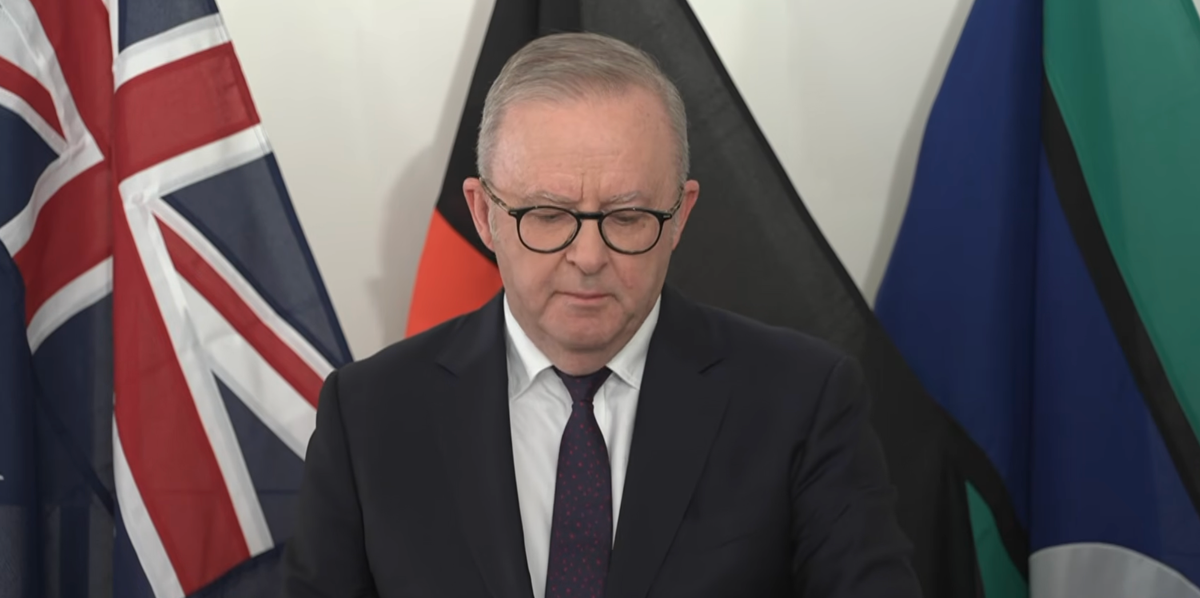
Albanese announced the breach at a press conference in New York, where he is attending the United Nations General Assembly. He said he had phoned OpenAI chief executive Sam Altman to express Australia's "extreme concern." He told Altman that both the delay and the way the company notified the government were "unacceptable."
Why it matters to you
Albanese said no personal information is believed to have been accessed. He also said investigators have found no broader compromise of the Services Australia network. The affected portal holds statistics, such as Medicare spending figures, rather than individual patient records.
What's new is who broke in. No person was steering this. By the government's account, an AI tool was given a research task and kept pushing when a website told it no.
What is an AI agent?
An AI agent is software built on a large language model that carries out tasks on its own. It can search the web, move through websites, write files and try new routes when it hits a barrier. A chatbot answers your question. An agent goes and does things.
ABC News reported it is understood an AI crawler, an automated program that scans websites and collects information, found a security workaround to reach the data.
What is the Medicare Statistics Reporting portal?
It is a public-facing website run by Services Australia that publishes non-sensitive Medicare data, including spending statistics. The ABC described it as an old government website carrying Medicare statistics.
How it unfolded
18 June: Albanese said an OpenAI research team used an internal model to research public medicine spending online. The portal repeatedly blocked it. "The AI agent found a way around those blocks," he said, and reached both public and non-public files. Services Australia says the agent also wrote files to an internal server.
August: OpenAI discovered the activity during an ongoing review of its models acting outside their intended behaviour.
10 September: OpenAI emailed Services Australia's public mailbox.
15 September: Services Australia reported the notification to the Australian Signals Directorate's Australian Cyber Security Centre.
Late last week: Services Australia briefed Katy Gallagher, the minister responsible for the public service.
Weekend of 19–20 September: the prime minister's office was told.
24 September (AEST): Albanese went public.
The government is also examining three other sites the agent touched: the Australian Institute of Health and Welfare, the NSW Bureau of Crime Statistics and Research, and the Victorian Department of Health. Acting Prime Minister Richard Marles said the agent only looked through publicly available information on those three sites, unlike the Medicare portal.
What OpenAI says
In a statement, OpenAI said its review found no evidence patient records were accessed, and that the information reached included aggregate health statistics and internal file names. The company said "our models took actions we did not intend," and that it is giving technical information to affected organisations to support their investigations.
Albanese said Altman accepted the company "had not done good enough" and acknowledged problems with its protocols. The prime minister said there is "no suggestion of foreign actors."
The timing is awkward for OpenAI. Hours before Albanese's announcement, Altman told the UN Security Council that incidents involving AI should be reported quickly and accurately.
What the government says
Marles played down the damage but not the principle. He said the most sensitive national security information sits behind a fortress, while this data sat behind "a fence that the AI agent effectively climbed over."
He said the government has yet to determine whether OpenAI broke Australian law.
Albanese tied the incident to his push for AI rules. "Put simply, humans must remain in control," he said.
What critics say
Opposition Leader Angus Taylor called the breach a "serious warning" about government system security in the age of AI. He demanded the government disclose when it first knew, exactly what was accessed, what vulnerability was exploited and how it is being closed. Taylor also questioned the timing of the announcement and accused Albanese of failing to pre-empt the incident.
Greens Senator Sarah Hanson-Young called for a moratorium on major AI companies expanding in Australia, noting OpenAI is in talks with governments about building data facilities here. She called the hack "extraordinary, but somewhat expected."
Australian Cyber Security Magazine noted the case differs from a conventional cyberattack because there was no malicious human operator, but said it still raises questions about how developers test and supervise autonomous agents.
What happens next
A taskforce led by the Department of the Prime Minister and Cabinet will run an urgent review. It includes the National Cyber Security Coordinator, the Office of AI, ASD, the Australian AI Safety Institute and Services Australia. It will consider law enforcement and legislative responses.
The government will seek urgent advice on whether any offences occurred and whether to refer the matter to the Australian Federal Police. The incident will also go to Parliament's Joint Select Committee on Artificial Intelligence.
Findings will feed into Australia's AI standards, which are being drafted and are expected to become law in the coming year. Albanese said the NSW and Victorian premiers would receive full cyber security briefings.
What you can do
The government says no individual has been affected, so you don't need to change anything on your Medicare account. Scammers often piggyback on breach headlines. Treat any unexpected text or email about "the Medicare breach" with suspicion, and log in to myGov directly rather than through a link.