Economy
RBA Governor Flags Rate-Hike Risk As Markets Price 88% Odds
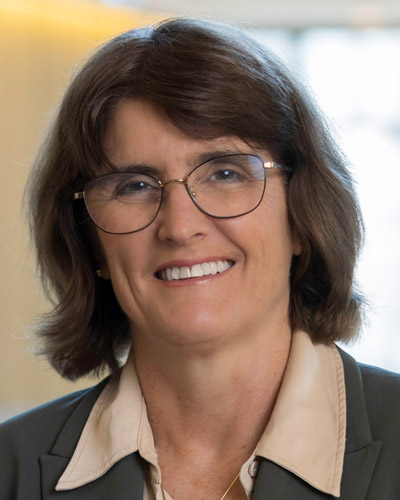
Reserve Bank Governor Michele Bullock used her last public appearance before Tuesday's rate call to flag inflation risks "skewed to the upside"
Speaking at a Committee for Economic Development of Australia (CEDA) event in Sydney on Tuesday 22 September 2026, Bullock confirmed the board is weighing a rate rise at next Tuesday's meeting — its last chance to move before Christmas spending kicks in.
"We've really been highlighting... here are some of the risks we think might be materialising, which are going to be important for considering whether to raise rates," she told moderator Chelsea Drake, chair of law firm Allens.
She stopped short of saying how she'd vote. "I'm only one person on the Board, so I can't tell you what the board will want to do," she said, when an audience member cited comments attributed to former RBA economist Lucy Ellis on ABC News, suggesting internal board members had been signalling a hike to the market. Bullock rejected the claim outright.
Why it matters to your wallet
The Reserve Bank has already hiked the cash rate three times in 2026 — February, March and May — taking it from 3.60 per cent to 4.35 per cent, before pausing at the June and August meetings. Futures markets are now pricing an 88 per cent chance of a fourth hike next Tuesday, which would push the cash rate to a 15-year high of 4.6 per cent, according to reporting by The Nightly's Stephen Johnson.
Commonwealth Bank isn't waiting to find out. It lifted its two-year fixed mortgage rate by 48 basis points to 6.82 per cent on Tuesday — nearly pricing in two rate rises before the RBA has even met. If both a September and a November hike land, that's five increases in 2026, adding roughly $597 a month to repayments on an average new $731,000 loan, per The Nightly's figures.
What is the cash rate, and why does 0.25 per cent matter?
The cash rate is the interest rate the RBA sets for banks lending to each other overnight. It's the lever the Bank uses to slow or speed up the economy: raise it, and variable home loan rates usually follow within weeks, cooling spending and — in theory — inflation. Most Australian mortgages are variable rate, unlike many countries where fixed loans dominate, so RBA decisions hit household budgets here faster and harder than almost anywhere else. Bullock made that point herself on Tuesday, calling it the "cash flow channel."
How It Started
Inflation has stayed above the RBA's 2–3 per cent target band for 12 straight months as of July, RBA chief economist Sarah Hunter said this week on The Pay Off podcast with Sylvia Jeffreys. Trimmed mean inflation sat at 3.6 per cent in the June quarter.
The Turning Point
A crude oil spike to four-month highs, driven by the ongoing Middle East conflict, has pushed average diesel prices to near $3 a litre. Bullock told the CEDA audience the RBA has modelled a worst-case scenario where oil hits US$200 a barrel and stays there — a level she said would be "very bad for inflation" and "very bad for the world economy."
What Changed
Unemployment has ticked up to 4.5 per cent in July, from 4.2 per cent a year earlier — normally a reason to ease off rate rises. But Bullock said the board is more worried about "excess demand" not clearing fast enough, partly fuelled by AI and data-centre investment competing with housing construction for materials and labour.
Two views on where rates go next
The RBA's own read is hawkish. Bullock and Hunter have both pointed to inflation risks "skewed to the upside," and Bullock said the board needs to "limit indirect effects" before high prices become locked into everyday expectations.
Not everyone agrees on timing. As recently as early September, a tracked panel of economists split 8–2 in favour of a hold, according to the OurTop10 Rate Prediction Index — only NAB's Sally Auld and Deutsche Bank's Phil O'Donaghoe were tipping a rise. That consensus has shifted hard toward a hike since, as banks repriced ahead of the meeting. Westpac remains the outlier among the big four, still forecasting no move in 2026.
What's Next
The RBA board meets Monday and Tuesday next week, with the decision released at 2:30pm AEST on 29 September, followed by Bullock's press conference at 3:30pm. Confusingly for data-watchers, the RBA's own August inflation figures don't land until 30 September — the day after the meeting — so the board will be voting partly blind on the freshest numbers. The RBA's Financial Stability Review, which Bullock flagged will address AI-driven "bubble" risk in US markets, is due 1 October. The next meeting after that falls on Melbourne Cup Day, 3 November.
Borrowers on variable loans can check how another 0.25 or 0.5 percentage point move would change their specific repayments using their bank's own online calculator, ahead of Tuesday's call.